About Me
I am currently a PostDoc researcher at IUSS Pavia and a member of the NepLab (PI: Valentina Bambini).
I completed my PhD at the Department of Philology, Literature, and Linguistics at the University of Pisa, where I was also a member of the CoLing Lab. My doctoral research was supervised by Alessandro Lenci.
During my PhD, I was a visiting researcher at the University of Texas at Austin, working under the supervision of Kyle Mahowald.
I earned my BA in Modern Literature (2018) and MA in Linguistics (2021) from the University of Pisa. After graduating, I moved to Naples to work as a mobile application developer, but later left to pursue my PhD (2022).
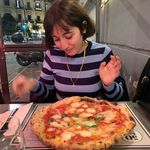
I enjoy reading, playing football, traveling and cooking—but above all, I love pizza! Proudly from Campania (South of Italy) and even prouder to be a dialect speaker.
- Computational Linguistics
- Psycholinguistics and Neurolinguistics
- Artificial Intelligence
PhD Computational Psycholinguistics
University of Pisa
MA in Linguistics
University of Pisa
BSc in Humanities
University of Pisa
My primary research focus lies in computational psycholinguistics, with a strong theoretical foundation in semantics and pragmatics. From a computational perspective, I investigate Theory of Mind (ToM)-like abilities in large language models (LLMs), while also exploring other aspects of pragmatic competence.
I am deeply engaged in the ongoing debate on cognitive and emerging abilities in LLMs, advocating for the integration of cognitive science, psycholinguistics, and computational linguistics to advance all three fields. I believe that insights from cognitive science and psycholinguistics can help develop more fine-grained computational analyses of language models.
My broader interests include language processing theories, neural alignment, grounding, experimental pragmatics, mechanistic interpretability, and LLM interpretability.